Search engine optimization: how it works, lever by lever
Search engine optimization is the work that helps a search engine like Google read, store and recommend your pages. A search engine crawls pages, indexes them, then ranks them for each search. You act on three levers: technical (Google can read your site), content (your pages answer the search) and links (other sites vouch for you). Here's how each one works.
 By Jérémy Santos Updated on October 30, 2026 Tested on his own SemChat account: first audit on October 29, 2026.
This page is part of the guide: SEO for small business
| Technical | Content | Links | |
|---|---|---|---|
| The question | can Google read my pages? | do my pages answer the search? | do other sites mention me? |
| Where to check | Search Console | your pages, reread | links and reviews you receive |
You’ve seen “search engine optimization” on a quote or in an article, and you want to know what’s behind it. Here’s a working definition, how a search engine works, and the three levers you can pull. It’s part of our guide to SEO for small business.
The SemChat links on this page are affiliate links: if you subscribe through them, I earn a commission, at no extra cost to you and with no effect on what I write.
What is search engine optimization? A working definition
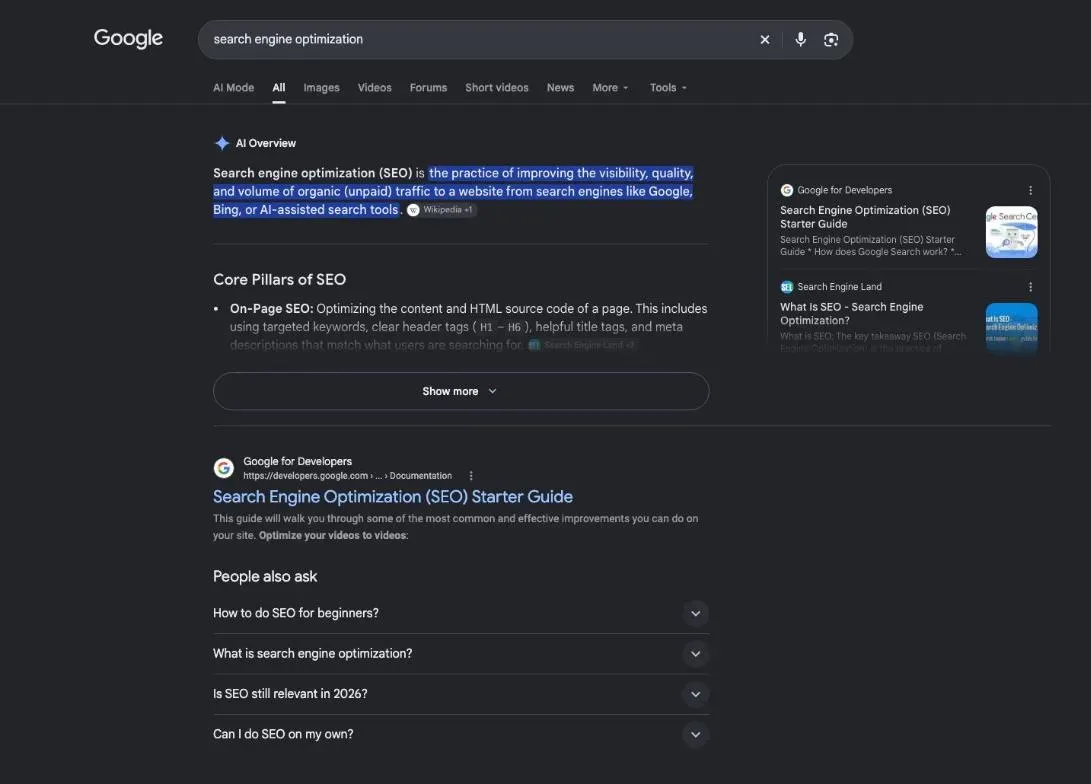
Search engine optimization is the work done on your site so a search engine understands it and shows it to the right people. Google’s definition: it “is about helping search engines understand your content, and helping users find your site” (SEO Starter Guide, read October 30, 2026). British English spells it “search engine optimisation”; it’s the same thing.
The short answer on the acronym
SEO stands for search engine optimization. “SEO optimization” and “SEO search engine optimization” repeat the same word twice, but people search for them, so you’ll see them around.
SEO, search engine optimization and search engine marketing
Search engine marketing (SEM) usually means paid search: ads on Google, billed per click. SEO works on organic results, which are free at Google. Ads stop when the budget stops; pages that rank keep bringing visits while they stay useful. Prices for both are on the SEO cost page.
How search engines work: crawl, index, rank
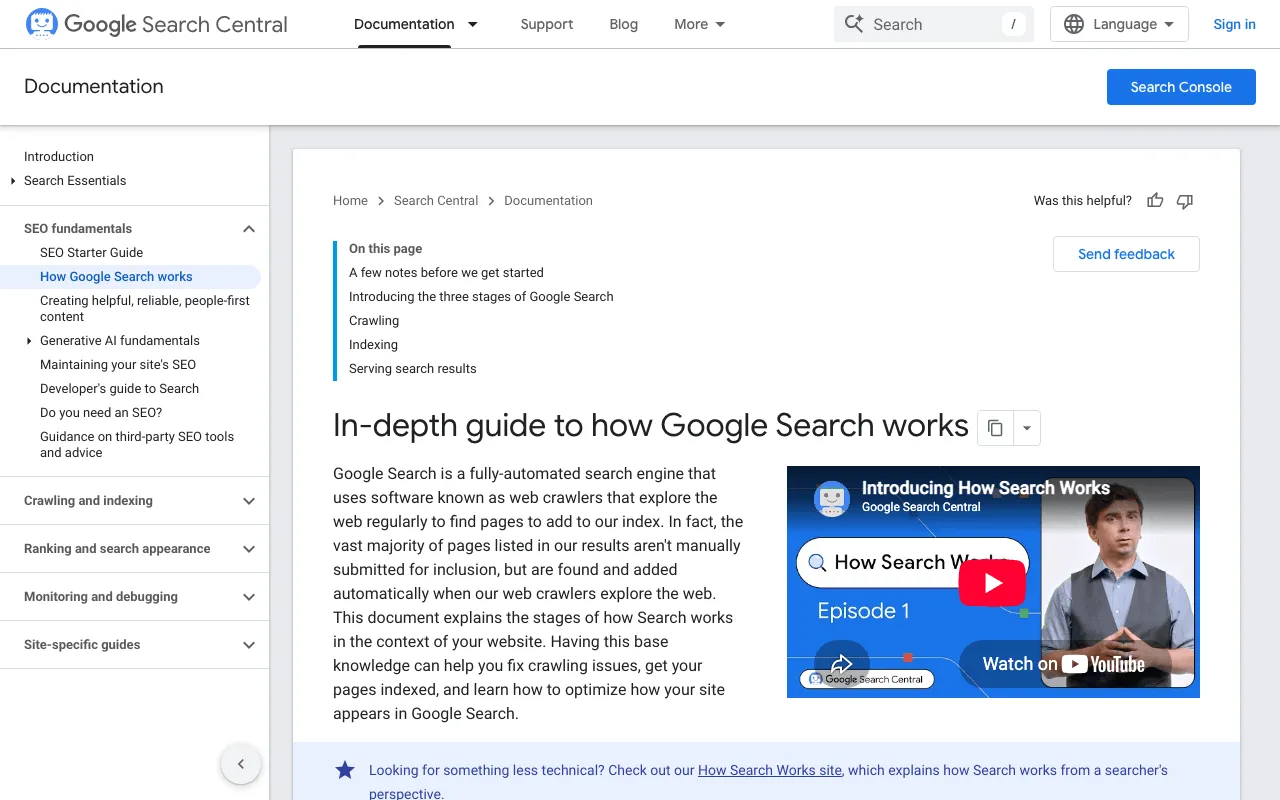
Google’s page on how Search works, in three stages. Screenshot of developers.google.com/search/docs/fundamentals/how-search-works, taken October 30, 2026.
In Google’s words: “Google Search works in three stages, and not all pages make it through each stage” (page read October 30, 2026).
- Crawling: Googlebot downloads pages, mostly found by following links.
- Indexing: Google analyzes each page and stores it in its index.
- Serving search results: for each search, it returns the pages it judges most useful.
And the warning that goes with it: “Google doesn’t guarantee that it will crawl, index, or serve your page”.
How search engines organize pages
The index works like a huge library catalog. A page that isn’t in it can’t show up, however good it is. That’s why the first check is always “is my page indexed?”, in Search Console or with a site: search.
How Google decides the order
Google weighs many factors, including the user’s location, language and device (How Search works, read October 30, 2026). One thing it doesn’t weigh is money: “Google doesn’t accept payment to crawl a site more frequently, or rank it higher” (same page).
The ranking factors, in plain words
Google doesn’t publish a full list. What its documentation does say, in plain words:
- Relevance: does the page answer the search?
- Helpfulness and reliability: Google asks for helpful, reliable, people-first content.
- Page experience: Core Web Vitals “are used by our ranking systems”, but good scores don’t guarantee a top spot (Understanding page experience, read October 30, 2026).
- Context: where the person is, their language, their device.
What doesn’t count: the length of the content alone, according to Google’s SEO Starter Guide.
Lever one: technical, so Google can read your site
Pages that load, on HTTPS, readable on a phone, linked to each other. Google notes that “Most searches are now done from mobile devices” (How to get your website on Google, read October 30, 2026). A technical audit checks all this at once.
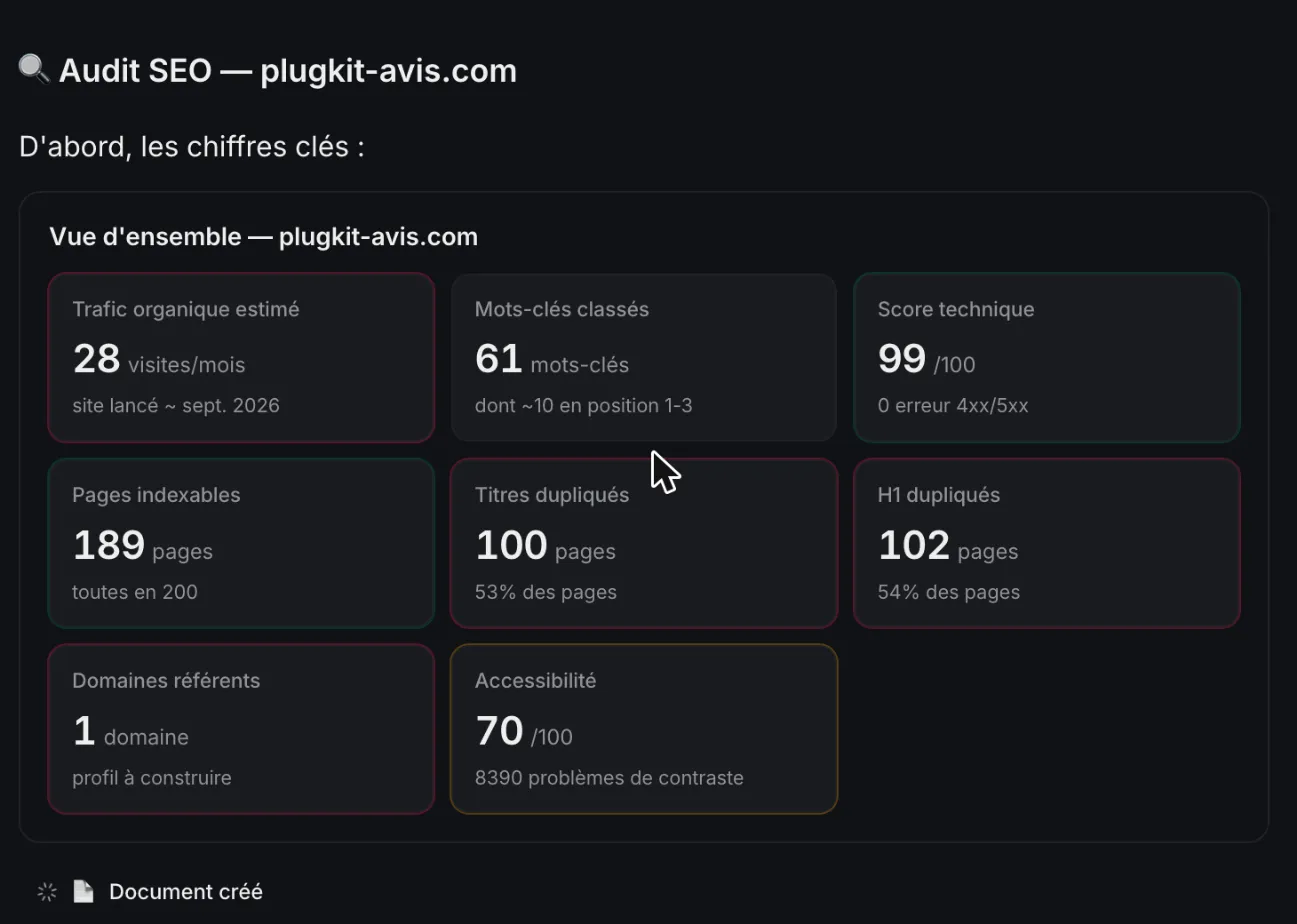
The key indicators of a real technical audit by SemChat, October 29, 2026 (French interface). Screenshot of the SemChat app, Jérémy’s account, Free plan.
On October 29, 2026, SemChat’s audit of my site plugkit-avis.com (run in French) returned a technical score of 99 out of 100 and 189 indexable pages, along with a contact page in 404 error that I confirmed by hand. A score is the tool’s own measure, not Google’s: what counts is whether your pages get indexed and shown.
Lever two: content that answers the search
One page per customer need, written with the words customers use. Answer the question in the first lines, then give the details: prices, area, photos, a way to reach you.
SEO optimization: what it means for one page
An optimized page has a clear title that starts with the search it targets, a direct answer near the top, headings, described images, and links to related pages. Nothing hidden, nothing stuffed.
Lever three: links from other sites

Links from other sites: other people vouching for you. Illustration by Zéro Corvée.
Links from other sites help Google find your pages and show that others vouch for you. Earn them from your trade association, partners, suppliers, local press. Never buy them: “please don’t pay them to link to you; that could be considered a violation of Google’s spam policies” (How to get your website on Google, read October 30, 2026).
User experience: the thread through all three
- 1 Technical the page opens fast, on any phone
- 2 Content the visitor finds the answer right away
- 3 Links satisfied people mention you elsewhere
Each lever serves the visitor first. A fast page that answers well gets read, shared and linked; Google’s systems try to reward that.
Common myths about search engine optimization
Google’s own documentation clears up several ideas that still circulate on quotes and forums (SEO Starter Guide, read October 30, 2026):
- “Longer pages rank better.” Google states that the length of the content alone doesn’t matter for ranking. A short page that answers beats a long page that wanders.
- “Put the keyword in your domain name.” Google writes that keywords in a domain name alone have hardly any effect.
- “Fill in the keywords meta tag.” Google Search doesn’t use it.
- “E-E-A-T is a ranking factor you can tick.” Asked whether it is a ranking factor, Google answers: “No, it’s not.” Experience, expertise, authority and trust describe what helpful content looks like, not a box to fill.
- “Someone knows the secret.” Google’s guide says there are no secrets that will automatically rank a site first.
Search engine optimization in practice: your first month
You don’t need a plan on paper. Four weeks, one block a week, is enough to start:
- Week 1: be seen. Verify your site in Search Console. Open the Pages report and note how many pages are indexed and why others aren’t.
- Week 2: fix what blocks. Repair or redirect pages in error, submit your sitemap, check that your site runs on HTTPS and reads well on a phone.
- Week 3: improve one page. Pick the page that matters most for your business. Rewrite its title so it starts with the search you target, answer the question in the first lines, add photos with clear descriptions, link it from your home page.
- Week 4: earn mentions. Ask three partners or suppliers for a link, and ask your last satisfied customers for a review on your Business Profile.
Then measure once a month in Search Console: impressions, clicks, indexed pages. Change one thing at a time so you know what worked.
How long search engine optimization takes
There’s no fixed delay. Google writes that some changes take effect in a few hours while others can take several months, and suggests waiting a few weeks before judging a change (SEO Starter Guide, read October 30, 2026). A new page can take from a few days to a few weeks to be crawled, and requesting a crawl doesn’t guarantee inclusion at all (Ask Google to recrawl your URLs, same date). Plan in months; ads are the only instant option, and they stop with the budget.
Google and the other search engines
Google isn’t the only engine: Bing, for example, has its own tool for site owners, Bing Webmaster Tools. The three levers are the same everywhere. Market share figures for the US: missing data (planned source: a dated measurement of search engine market share).
Search engine optimization techniques you can apply yourself
- Verify your site in Search Console and check the Pages report.
- Fix pages in error and submit your sitemap.
- Rewrite the titles of pages with many impressions and few clicks.
- Link your pages to each other with descriptive words.
- Ask partners and customers for links and reviews, never paid.
The step-by-step guides: how to get my website on Google and how to improve SEO.
Free search engine optimization tools to start with
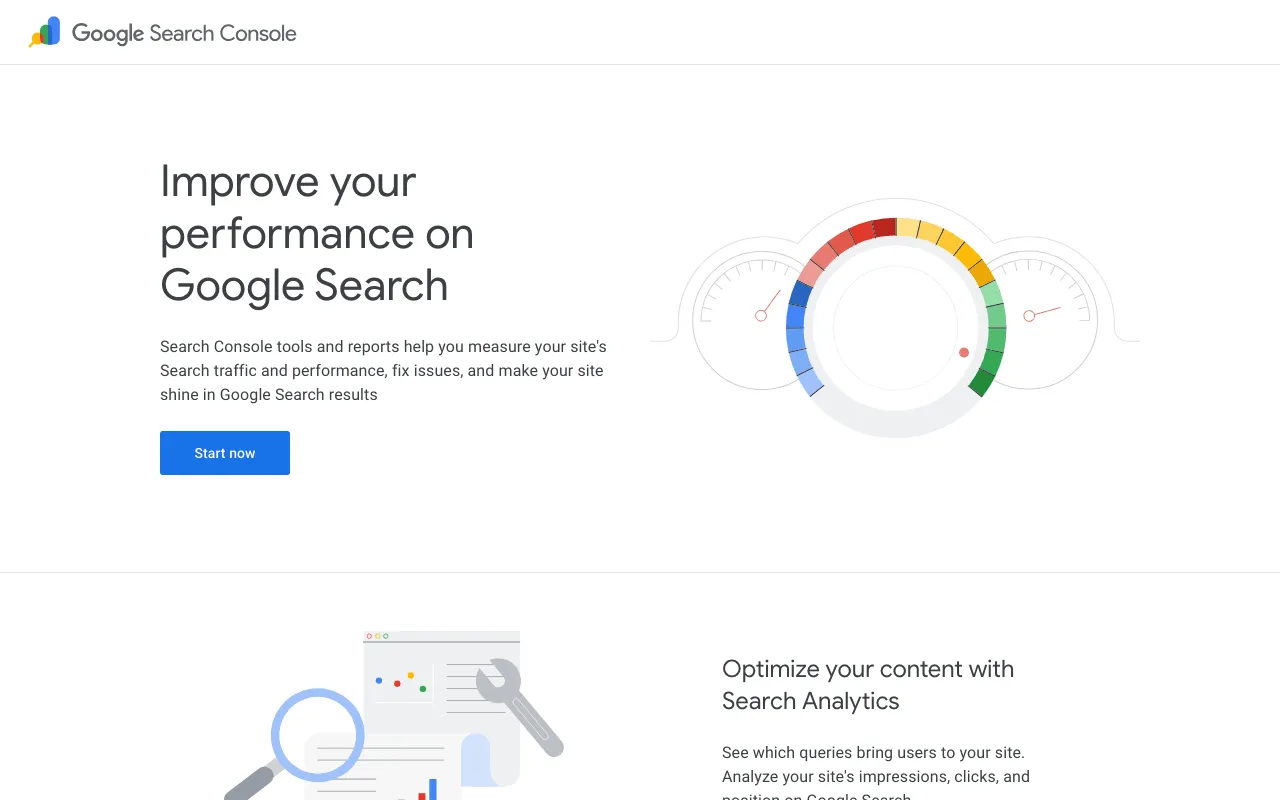
Google’s Search Console overview page, a free tool. Screenshot of search.google.com/search-console/about, taken October 30, 2026.
Search Console is free, and PageSpeed Insights only needs your page’s address. SemChat’s Free plan costs €0, “Try semchat with no credit card” (semchat.io/en/pricing, read October 30, 2026); note that one full audit used up its whole monthly quota in my test. My full test is in the SemChat review.
A free search engine optimization course
Google’s SEO Starter Guide is free and open to all, written for site owners rather than specialists. Read it once, then practice on your own site.
More on the basics: SEO meaning in plain words, how to get my website on Google for free for no-cost levers, and how to get to the top of Google search for ranking higher.
Search engine optimization comes down to three levers: a site Google can read, pages that answer, links you earn. Check them in that order.
Frequently asked questions
How do I start SEO as a beginner?
Verify your site in Search Console, check which pages are indexed, then pick one page and make it answer one search clearly. Google's free SEO Starter Guide is written for site owners and is a good first read.
How does search engine optimization work for a website?
Google crawls your pages, indexes the ones it understands, then ranks them for each search. You help at each stage: a site it can read, pages that answer real searches, and links from other sites.
How can I learn search engine optimization?
Start with Google's SEO Starter Guide, free and open to all, then practice on your own site with Search Console. Fix one thing at a time and watch what changes after a few weeks.
Is search engine optimization free?
At Google, yes: it costs nothing to appear in organic results, and Google doesn't accept payment to rank a site higher (Google Search Central, read October 30, 2026). The work costs time, yours or a provider's.
Let your AI do the chores of getting found online.
10% off your subscription, for life with my link, if you subscribe within 2 weeks of signing up. No code. All about the SemChat promo code
Affiliate link: it costs you nothing extra.
Verified sources
- Google Search Central: SEO Starter Guide (October 30, 2026)
- Google Search Central: In-depth guide to how Google Search works (October 30, 2026)
- Google Search Central: How to get your website on Google (October 30, 2026)
- Google Search Central: Understanding page experience (October 30, 2026)
- Google Search Console overview page (October 30, 2026)
- SemChat pricing (October 30, 2026)
- Google Search Central: Ask Google to recrawl your URLs (October 30, 2026)