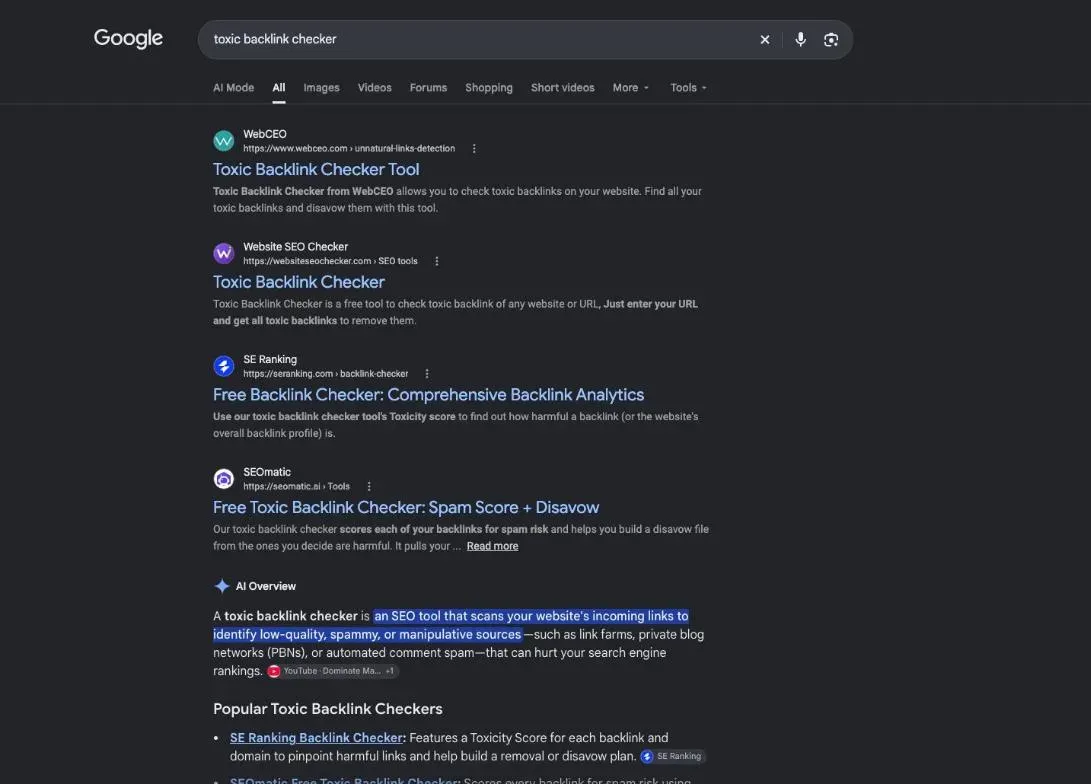
Toxic backlink checker: judge your links before you trust a verdict
A toxic backlink checker flags the links pointing to your site that it thinks could hurt you, using a score of its own. Google publishes no such score, and says most sites will never need its disavow tool. Use a checker to list and sort your links, then open each linking page yourself before you act.
 By Jérémy Santos Updated on 30 October 2026 Tested on his own SemChat account: first audit on 29 October 2026.
This page is part of the guide: link building tool

Review the links from other sites, one by one. Illustration by Zéro Corvée.
A toxic backlink checker is a tool that scans the links pointing to your site and flags the ones it finds risky. It’s one job a link building tool can do for you. Trouble is, a checker can count right and still judge wrong.
I saw it happen on my own site, plugkit-avis.com, on 29 October 2026. Below are the steps to check your links, what the scores mean, and where SemChat stands. On 30 October 2026, I also tested SemChat’s backlink audit skill on the same site, with one sentence. In about 3 and a half minutes, it counted right (1 domain, 1 link, as DataForSEO Backlinks confirms) and laid out a 6-month plan. But it called that link risk-free without knowing where it came from. The test used 5.6 points of the Starter plan’s monthly quota. The SemChat buttons on this page are affiliate links.
What toxic backlinks are, and why they matter
A backlink is a link from another site to yours. Google’s Links report help puts it this way: a backlink “links back to your site.” Most backlinks are good news. The risky ones are those built to game Google.
Where toxic links usually come from
Google calls them link spam: “the practice of creating links to or from a site primarily for the purpose of manipulating search rankings” (spam policies, read 30 October 2026).
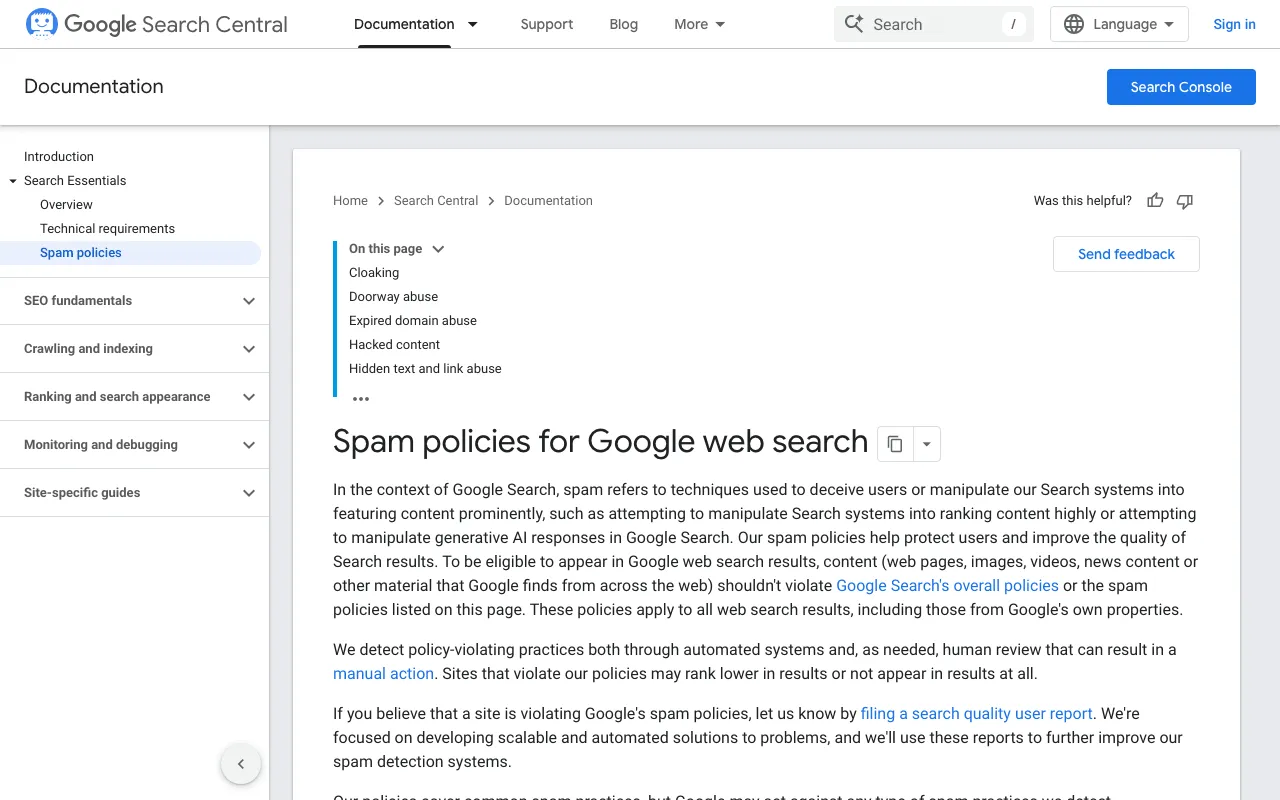
Its examples include:
- “Buying or selling links for ranking purposes”;
- “Low-quality directory or bookmark site links”;
- “Using automated programs or services to create links to your site.”
Google also notes that paid links for advertising are fine “as long as they are qualified with a rel=“nofollow” or rel=“sponsored” attribute value.” A sponsored post marked as such isn’t a problem.
What a toxic backlink checker measures: toxicity and spam scores
A checker gives each link or domain a score: toxicity, spam, risk. Each tool computes its own, on its own scale. None of the Google pages I read on 30 October 2026 publishes such a score.
| Tool score | Your own check | |
|---|---|---|
| What it is | an estimate on the tool's own scale | you open the page that links to you |
| What it sees | patterns across many sites | the topic, the readers, the other links |
| What Google says | it doesn't evaluate or endorse such tools | it can assess which links to trust in most cases |
Google is blunt about disavowing: “In most cases, Google can assess which links to trust without additional guidance, so most sites will not need to use this tool” (Search Console Help, read 30 October 2026). So a high score is a reason to look, not a reason to act.
Authority scores: what DA and similar metrics estimate
Next to spam scores, tools show an authority score for the linking site. Three you will meet, from their dated fiches and pages:
- Moz computes Domain Authority, from 1 to 100, which Moz itself says is not a Google factor (Domain Authority page, read 30 October 2026).
- Ahrefs has its “proprietary Domain Rating (DR) metric” for judging a site’s “backlink popularity” (Backlink Checker page, read 30 October 2026).
- Majestic computes Trust Flow, for quality, and Citation Flow, for quantity, both from 0 to 100 (fiche, 30 October 2026).
Never compare a score from one tool with a score from another. And keep Google’s warning in mind: it “doesn’t evaluate or endorse third-party SEO tools, and these tools don’t have access to Google’s internal ranking data” (Do you need an SEO?, read 30 October 2026).
Step 1: list every link pointing to your site
Start with Google’s free Links report in Search Console. Its help is clear about the limits: “It shows a sample of internal and external links to help you understand your site’s overall link profile” (read 30 October 2026).
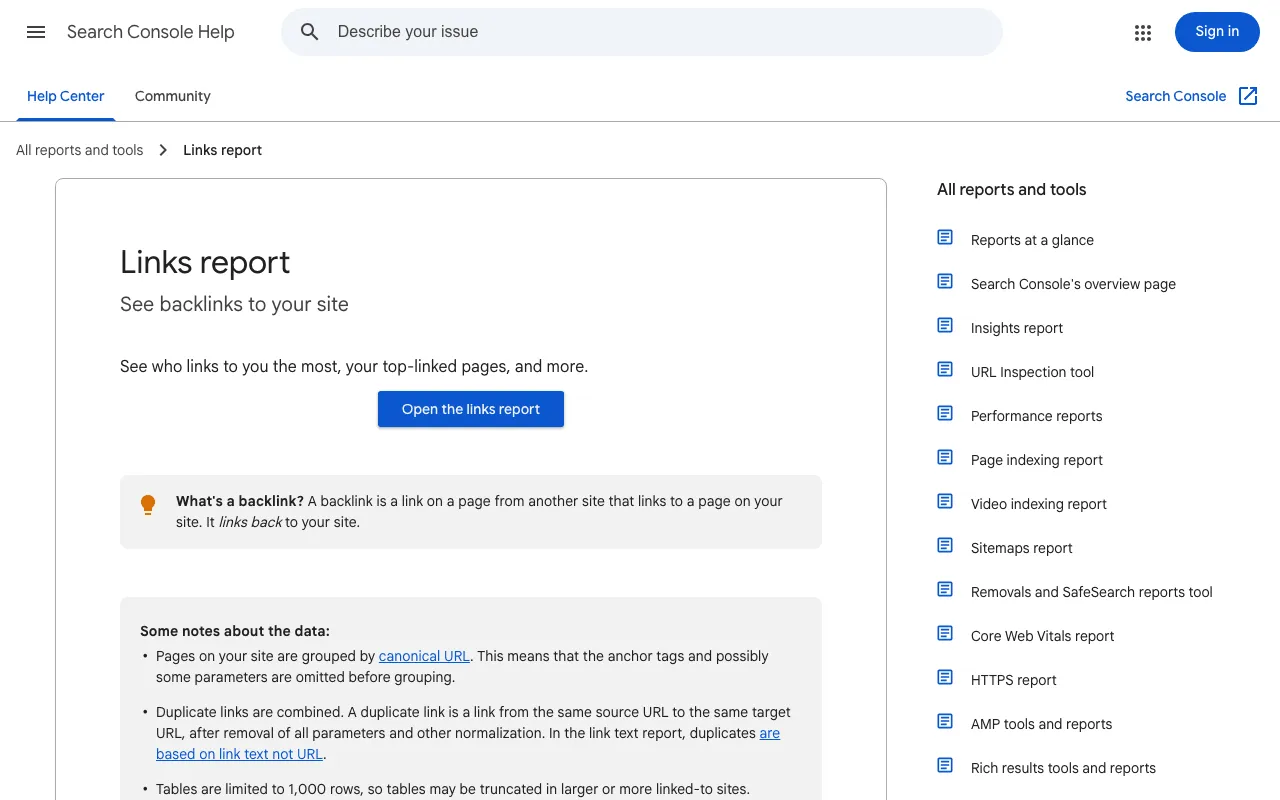
Two more limits from the same page: the report keeps links found over time, some since removed, and it “doesn’t specify if a link is marked as nofollow.”
A free backlink checker for a first count
To add links the Search Console sample misses, a free checker helps. Seobility’s Backlink Checker has a Basic plan with 5 checks per day at “Cost: Free forever” (page read 30 October 2026). I haven’t tested it. To look at a competitor’s links as well as yours, our guide on how to check backlinks shows what to look at in a link profile.
Write each link in a spreadsheet: the linking site, the exact linking page, your page that gets the link, the link text, and a blank column for your decision.
The Ahrefs and Semrush backlink checkers
Both have free checkers. I haven’t tested either; here is what their pages and our dated fiches say.
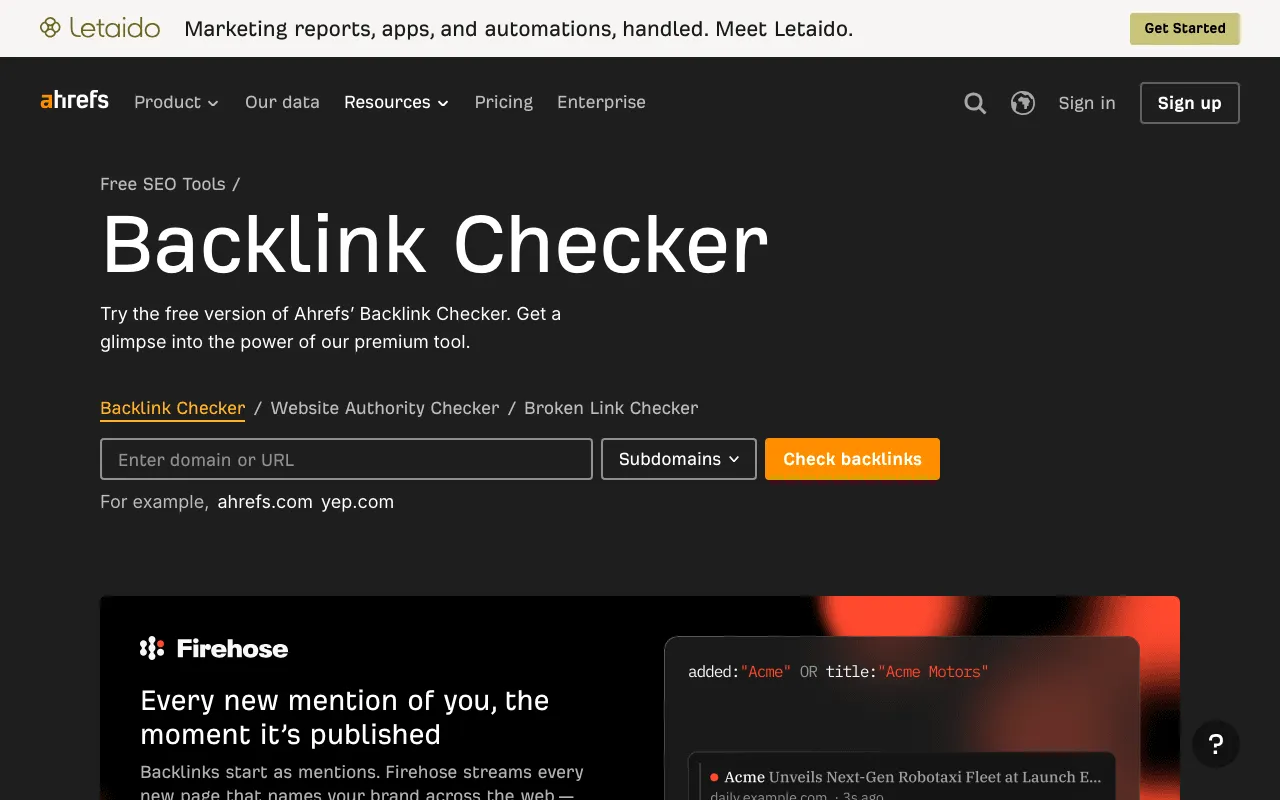
- Ahrefs: the free Backlink Checker needs no account and shows the first 20 backlinks, per its FAQ (29 October 2026). Its French page says the first 100: the two pages disagree.
- Semrush: its free tools without sign-up include a Backlink Checker. Its llms.txt describes its paid backlink tools as able to “audit backlink profiles, identify toxic links, discover outreach prospects” (fiche, 29 October 2026).
Step 2: judge each link’s real quality
Now open each linking page. Four questions:
- Is the topic close to yours?
- Does the site have real readers: recent posts, named authors?
- Is the page written for people, or is it a bare list of links?
- How many outgoing links does it hold? A page that links to thousands of sites recommends no one.
The profile a tool called clean: one link from a link agency page
On 29 October 2026, I ran SemChat’s link campaign skill on a page of plugkit-avis.com. I typed the request in French, on a French site, in the French interface. Its first tool is a backlink profile. The full test is on our link building outreach tools page.
The count was right: 1 link, 1 domain, anchor “plugkit-avis.com.” SemChat even admitted “le nom exact du domaine référent n’est pas renvoyé par mes données” (the exact name of the referring domain isn’t returned by my data). Then it called the profile “Profil propre” (Clean profile).
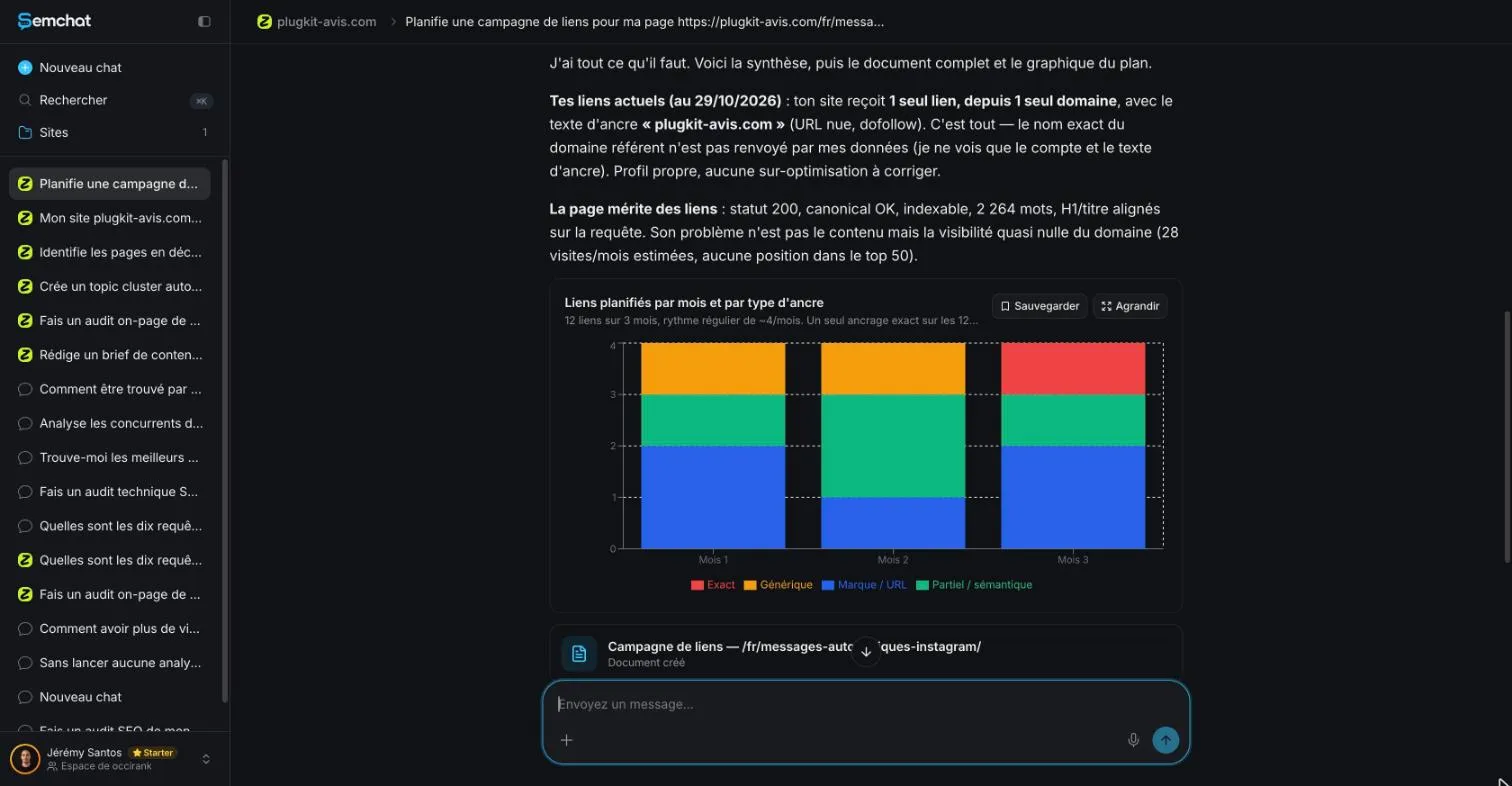
That verdict was false. I looked up the source with DataForSEO Backlinks the same day. The only link came from hub.rankvance.com, a link agency page with 2,341 outgoing links and a spam score of 20 on DataForSEO’s own scale. A tool that can’t see the source can’t judge the link.
Step 3: decide: remove, ask for removal, or disavow
For each link, pick one: keep it, watch it, or act on it. Keep covers most links. Watch is for an isolated doubtful link. Act means asking the linking site to remove the link, and only then, maybe, disavowing.
Disavow only after checking, never on a score alone
Google’s conditions are strict: “You should disavow backlinks only if: You have a considerable number of spammy, artificial, or low-quality links pointing to your site, AND The links have caused a manual action, or likely will cause a manual action, on your site” (read 30 October 2026).
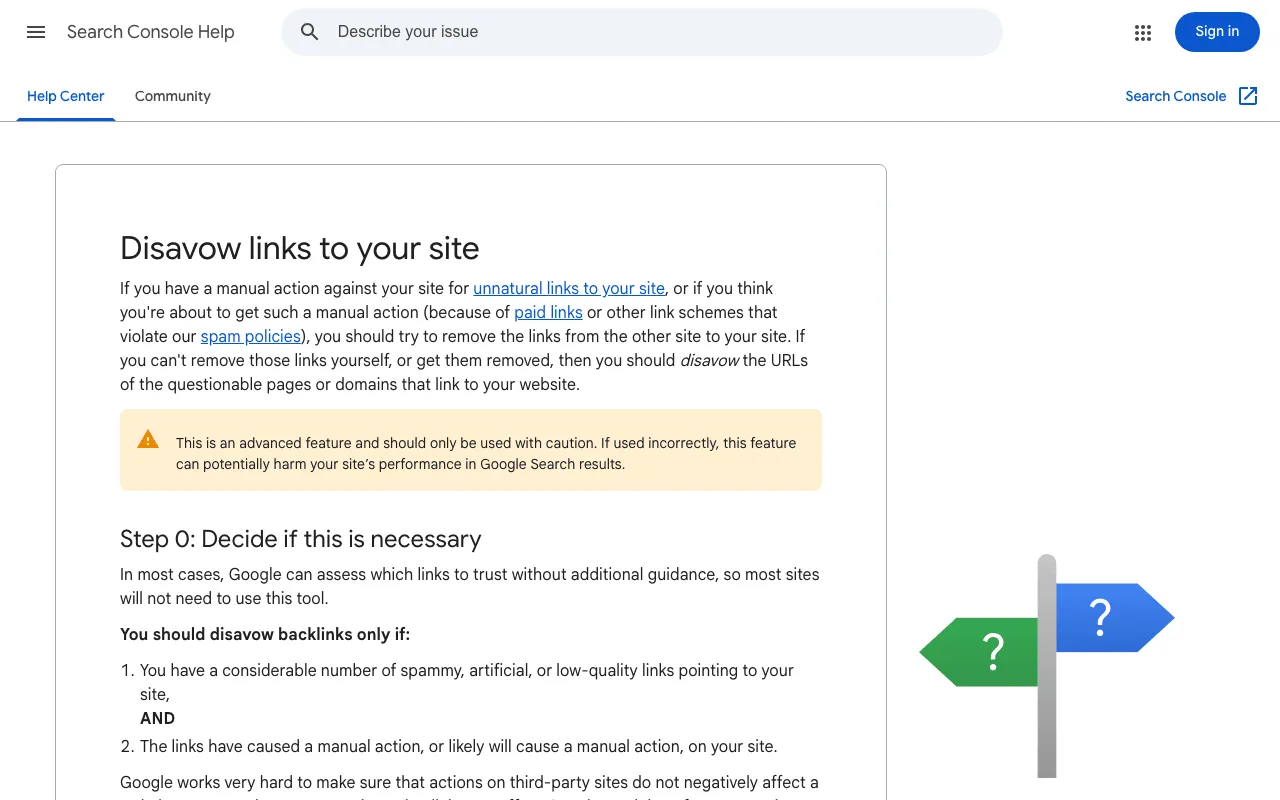
My own case: I watch the agency link; I don’t disavow it. One link isn’t “a considerable number,” and there is no manual action. A checker that pushes you to disavow on a score alone goes further than Google does.
The full backlink audit, with or without a tool
A checker covers counting and flagging. A full audit adds the link text, the pages that receive links, lost links and your competitors’ links. Our link audit guide walks through every step with the free Search Console report.
SemChat’s backlink audit skill: tested on 30 October 2026
SemChat lists 17 skills in its Skills tab, including one called Audit netlinking, its link audit (29 October 2026). In the chat menu, its sample sentence starts with “Fais-moi un audit complet des backlink…” (Give me a full audit of the backlink…), cut off on screen.
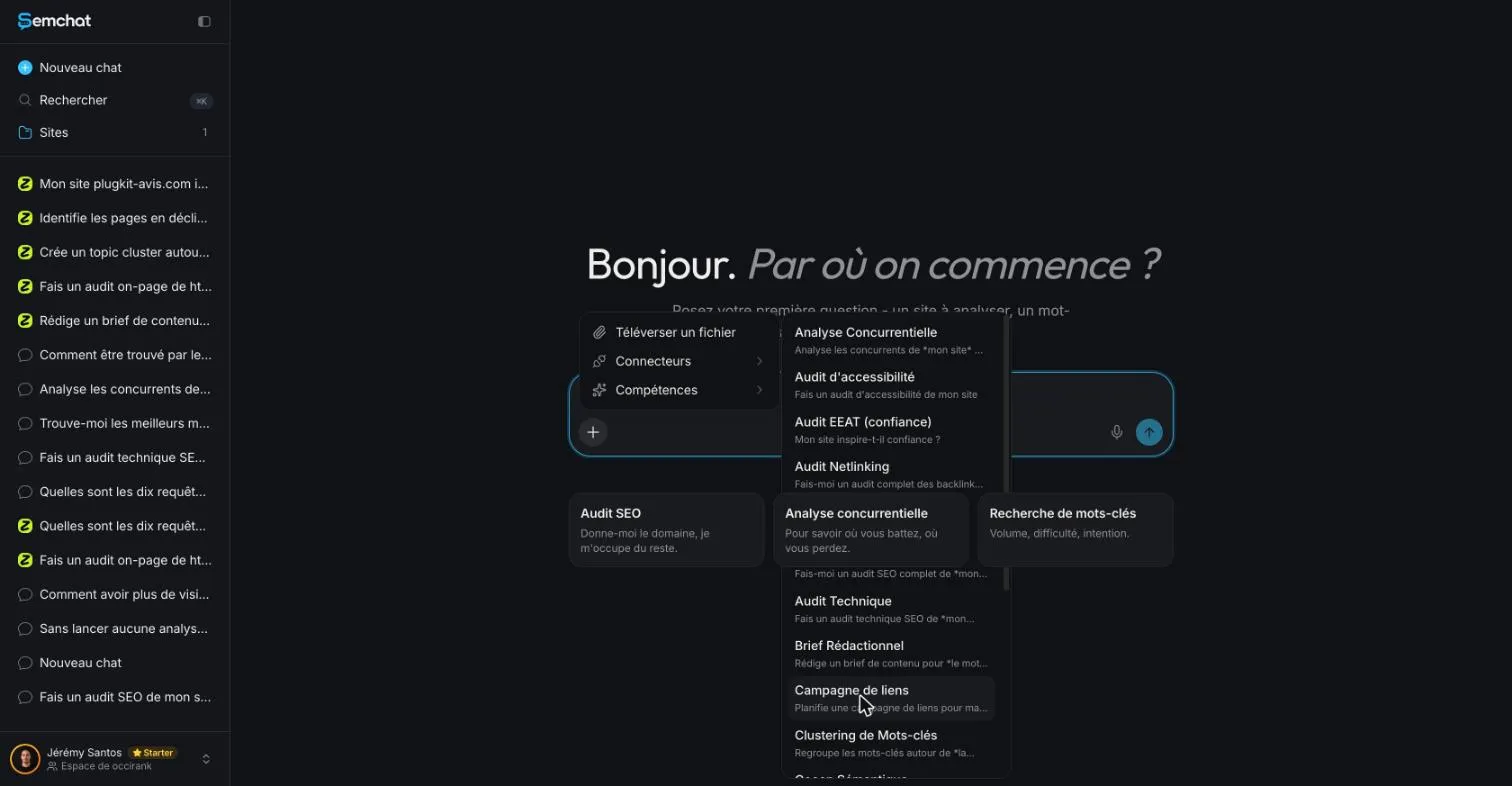
I ran it on 30 October 2026, on the Starter plan, with one sentence typed in French: “Analyse les liens qui pointent vers plugkit-avis.com et dis-moi comment en avoir plus.” (Analyse the links pointing to plugkit-avis.com and tell me how to get more.) SemChat picked the right skill on its own, Audit Netlinking. It ran, in order: the site analysis, the backlink profile of plugkit-avis.com and then of 4 competitors, a domain overview of each (two competitors timed out, so it ran them again), then competitor identification.
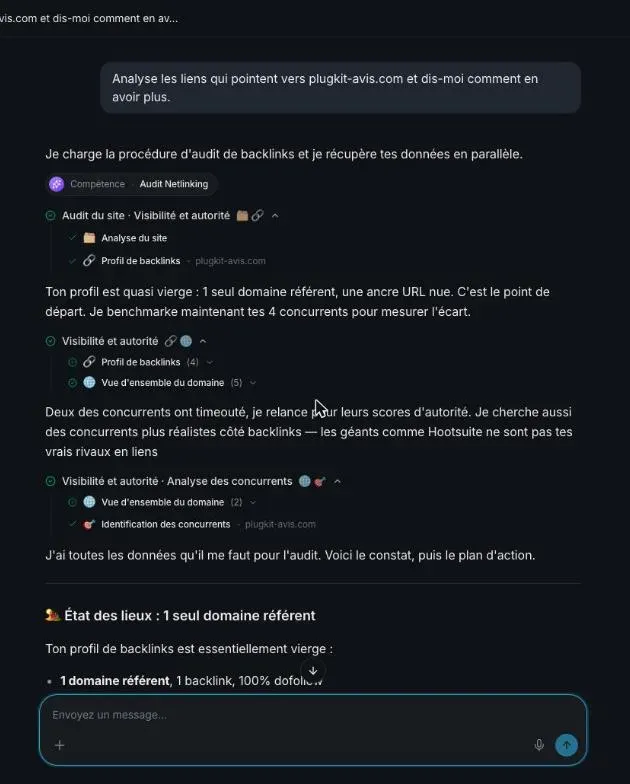
In about 3 and a half minutes, it returned:
- the count: 1 referring domain, 1 link, an anchor that’s the site’s bare address, an authority score “not measurable,” as of 29 October 2026;
- the verdict: a profile that’s blank and clean, no risk, nothing to clean up or disavow;
- a chart of referring domains for plugkit-avis.com against Metricool, Sprout Social, Buffer and Hootsuite;
- a downloadable document, “Audit Backlink : plugkit-avis.com”: current and target anchor profile, risks, 6-month targets, an anchor plan by stage, check-ins at the end of January and the end of April 2027;
- 3 actions for the week: contact the PlugKit team, list the site in 3 software directories, answer in a Facebook group for business owners with a link to a page of the site.
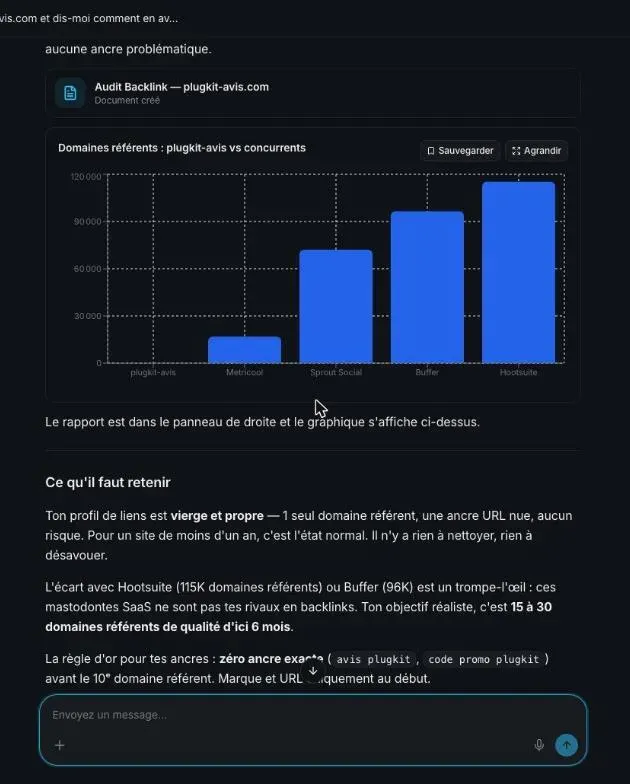
What it got right: it says itself that Hootsuite and Buffer, with tens of thousands of referring domains, aren’t real link rivals, and sets a realistic goal of 15 to 30 domains in 6 months. It asks for no exact-match anchor before the 10th domain, and reminds you that a paid link gets marked sponsored. The page it suggests linking to does exist (checked on 30 October 2026).
What the site page shows today: incoming links still loading
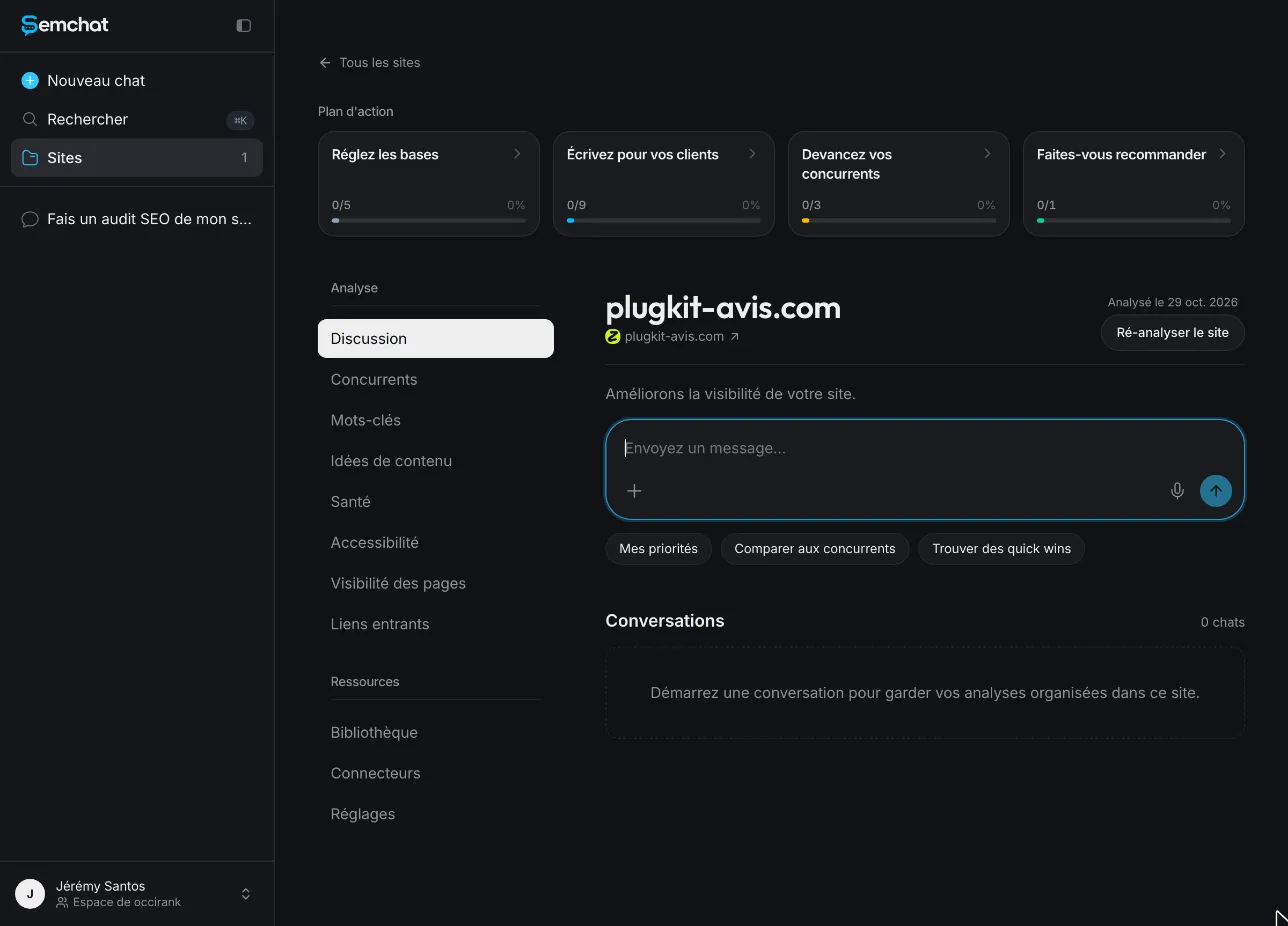
On 29 October 2026, the Liens entrants (incoming links) tab of the site page read “récupération en cours” (fetching in progress). And the list of incoming links, read through SemChat’s API, was empty for plugkit-avis.com.
What the backlink audit test proved: four checks
We planned four checks against DataForSEO Backlinks and the Search Console Links report. Here are the answers from the 30 October 2026 test:
- Does it count the links and domains right? Yes. DataForSEO Backlinks, the same day: 1 link, 1 referring domain, 1 referring page, a followed link in the main content, first seen 29 October 2026, spam score 20. SemChat’s numbers are correct.
- Does it name the linking sites, or only count them? It only counts. The source is “pas identifié nominativement par les données” (not identified by name in the data).
- Does it judge the agency link as doubtful this time? No. It calls the profile clean, with no risk. That verdict is false: the link comes from hub.rankvance.com, a link agency page with 2,341 outgoing links (DataForSEO Backlinks, 29 October 2026), spam score 20. Same mistake as the link campaign skill above.
- Does it advise a disavow, and on what grounds? No: nothing to clean up or disavow. On a single link with no manual action, that matches Google’s advice, even if the “clean” label doesn’t hold.
Other limits: its search for sites that link to your competitors came back empty, so its targets stay generic (blogs, directories), and it slips “click here” into its list of generic anchors. The Search Console Links report wasn’t checked for this test: missing data.
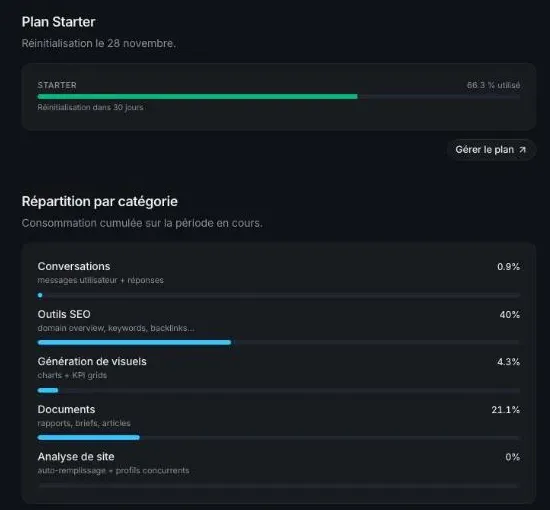
Cost: the Usage tab of the Starter plan went from 60.7% to 66.3%, so 5.6 points of the month’s quota, the most expensive of our four tests on 30 October 2026.
After these two tests, use a toxic backlink checker to count and sort, and keep the judgment for yourself. Open every page that links to you, compare the tool’s verdict with Google’s rules, and disavow almost never. For everything else SemChat does well or badly, read our SemChat review.
Frequently asked questions
Can you check toxic backlinks for free?
Yes, for a first pass. The Search Console Links report is free and shows a sample of the sites that link to you. Seobility's Backlink Checker has a Basic plan with 5 checks per day at “Cost: Free forever” (page read 30 October 2026). Ahrefs' free Backlink Checker needs no account. None of them replaces opening the linking pages yourself.
How do you check a site's spam score?
With a third-party tool, since each one computes its own score on its own scale. In our test, DataForSEO Backlinks gave the page linking to plugkit-avis.com a spam score of 20 (29 October 2026). Google doesn't use these scores: it says it doesn't evaluate or endorse third-party SEO tools, and these tools have no access to its internal ranking data.
What makes a backlink good quality?
A real site on a topic close to yours, with real readers, that mentions you in text written for people. The link text sounds natural: your name, your address, or a phrase in a sentence. A page that lists thousands of outgoing links, like the agency page with 2,341 links that pointed to our test site, recommends no one.
Does Google use a toxicity score for backlinks?
Not in the pages we read on 30 October 2026. Google defines link spam as links created primarily to manipulate search rankings, says it can assess which links to trust in most cases, and reserves disavowal for sites with a considerable number of bad links and a manual action, actual or likely.
Let your AI do the chores of getting found online.
10% off your subscription, for life with my link, if you subscribe within 2 weeks of signing up. No code. All about the SemChat promo code
Affiliate link: it costs you nothing extra.
Verified sources
- Google Search Central: Spam policies for Google web search (30/10/2026)
- Search Console Help: Disavow links to your site (30/10/2026)
- Search Console Help: Links report (30/10/2026)
- Google Search Central: Do you need an SEO? (30/10/2026)
- Ahrefs: free Backlink Checker (30/10/2026)
- Ahrefs FAQ (free Backlink Checker, first 20 backlinks) (29/10/2026)
- Semrush llms.txt (backlink analytics and link building) (29/10/2026)
- Seobility: Backlink Checker (30/10/2026)
- Moz: Domain Authority (30/10/2026)
- Majestic: Trust Flow (30/10/2026)
- SemChat pricing (Free plan) (30/10/2026)